Posts

Showing posts with the label Common Core Standards

What Happened to Ebonics?

Image
Turmoil in 1980s Oakland Leads to Continued Definitive Conclusions about Language’s Impact on Education in the 2020s by Matthew Bamberg Photo by Kiana Bosman on Unsplash The Ebonics debate has often been misunderstood. It refers to the dialect of AAVE (African American Vernacular English). This type of language is prevalent in the Black community and has also spread into popular culture through lyrics in rap music and similar genres. I be workin’ Yes, I be workin’ on this article. This can be defined as: I’ve been working on this article for a while, although not necessarily at this very moment. I begin here because using AAVE helps readers understand the importance of training teachers to use it in our classrooms. Before getting into the meat and potatoes of the point, AAVE is an important dialect and, therefore, should be treated with the utmost respect, especially when dealing with it as a teacher. Slavery was Brutal The history of AAVE in the United States began in the 17th and 18t...

Navigating the 2024 Presidential Election: Key Resources for Students and Voters Ahead of Election Day and Debates

Image
Matthew Bamberg photo collection. Tuesday, Nov. 5, 2024, is Election Day in the United States. Tuesday, Sept. 10th, is the big Harris vs. Trump debate. Millions of Americans are expected to listen in. Having resources for teaching and learning is valuable for students and others interested in the who, where, when, what, and how (rules) of the upcoming presidential election. In this election in 2024, use text and images to find your way around many issues of the Democratic and Republican campaigns. Here’s the skinny for adults and children alike: Who: Donald Trump (R) Kamala Harris (D) Where:  National Constitution Center in Philadelphia Broadcast on ABC (live-streamed on ABC News Live, Disney+ and Hulu) When:  Tuesday, Sept. 10, 2024, 9 pm Eastern Time (6 pm Pacific Time) What:  PBS. Election Central.  Interactive Lesson (1), Video (63), Media Gallery (6), Interactive (3), Lesson Plan (1) for Grades 3–5, 6–8, 9–12 , Resources in Spanish (2) How:   Debate Rules f...

Climate Change Neglect in Education

Image
Much of the curriculum in schools is silent on climate change, as the New York Times reports. The article about addressing the issue in education, especially middle school,  states that there are more articles online that misinform about the topic than cover it accurately.  Teaching students to search for reliable information on the topic should look for search terms in Google that will lead them to accurate scientific information. While the article states the importance of teaching this topic to the next generation, it sidesteps how teachers can find accurate information about climate change. Students, parents and teachers can investigate the reputable information about the topic with one simple set of search parameters on Google. The keywords are as follows: NOAA climate change site:.gov It's a travesty that The Times' goals don't include informing people about NOAA, the National Oceanic Atmospheric Administration in its article about climate change. The article mentions...

Are Syllogisms a Missing Part of Common Core?

Some educators have rejected Common Core based on its lack of critical thinking with regards to an argument (see links below).  Syllogisms help you to find out if an argument you have created for an essay is logical. Understanding them is tough. Seeing examples of them in color coded text reveals that there is a pattern you can set up to come up with a conclusion from two claims. You can use the following examples to develop a syllogism for your paper. An example of a syllogism is: Claim 1:  All mammals are warm-blooded animals. Claim 2: Warm blooded animals have a constant body temperature . Mammals such as whales have a constant body temperature . Logical Syllogisms   Syllogisms check to see if your argument in valid. Let's take a look at the following logical syllogism: An example of a syllogism is California is a state ; All states have unique elected governments . California has a unique elected government.   Let's take a look at...

Fourth Grade Close Reading Lesson Plan

Title: Close Reading of Informational Text Standards RI4.1 Refer to details and examples in a text when explicitly explaining text and when drawing inferences RI4.2: Determine the main idea from text and explain how it's supported by key details; summarize text RI4.4: Determine the meaning of general academic and domain-specific words or phrases in the text RI4.5: Deseribe the overall structure of information in a text (chronological, compare/contrast, cause/effect, problem/solution) Learning Target Students will determine the theme or main idea of the text by summarizing gist of article as demonstrated by participation in a close reading activity. Date: Materials: Paper, pencils, post-it notes for students, poster paper, markers for teacher, ELMO Engagement Strategies Students will read informational article Students will annotate article Students will pair share with left/right partners Procedure 1. Teacher shares that c...

Get Paid for Your Lesson Plans

You can get paid for your lesson plans, workbooks, thematic units and graphic organizers/thinking maps at Teachers Pay Teachers . Registration is quick and easy, taking only about 10 minutes to complete, which includes uploading a "selfie" and giving some details about your education and experience. Teaching materials are inexpensive and you can pay via paypal. Submit your teaching materials and get paid for all that work on your lesson plans. 

Common Core Nonfiction--Hurricanes, Tornados and Tropical Storms

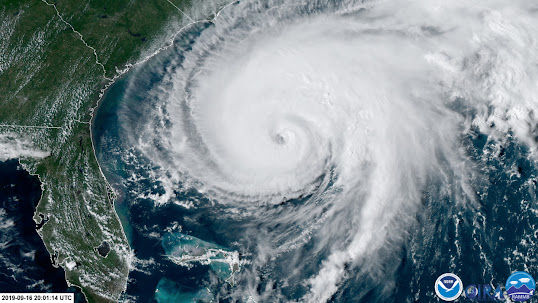
As you might have heard the emphasis of common core is nonfiction, that is the standards address the fact that students will be reading more nonfiction titles than fiction ones. A popular and relevant nonfiction topic would be hurricanes and tornadoes--popular because the topic is one that generates a high interest level among students and relevant because of the increased activity of these storms in the United States. The conversation is bound to come up whether you are covering them in the curriculum or not. A lesson about these storms is a must. The first consideration you will want to keep in mind is why these two types of storms are paired together. When students learn about hurricanes and tornadoes at the same time, they get the opportunity to compare and contrast these two types of tumultuous weather events that subtly contrast each other at the same time as having many characteristics in common. From there, students will have the opportunity to write a compare/contrast e...

Popular posts from this blog

STEM Wildfire Education Necessity

Social Emotional Skills and Holistic Education

Writing a Personal Essay