Posts

Showing posts from November, 2022

What Happened to Ebonics?

Image
Turmoil in 1980s Oakland Leads to Continued Definitive Conclusions about Language’s Impact on Education in the 2020s by Matthew Bamberg Photo by Kiana Bosman on Unsplash The Ebonics debate has often been misunderstood. It refers to the dialect of AAVE (African American Vernacular English). This type of language is prevalent in the Black community and has also spread into popular culture through lyrics in rap music and similar genres. I be workin’ Yes, I be workin’ on this article. This can be defined as: I’ve been working on this article for a while, although not necessarily at this very moment. I begin here because using AAVE helps readers understand the importance of training teachers to use it in our classrooms. Before getting into the meat and potatoes of the point, AAVE is an important dialect and, therefore, should be treated with the utmost respect, especially when dealing with it as a teacher. Slavery was Brutal The history of AAVE in the United States began in the 17th and 18t...

Close Reading Updated Procedure for Including Cognates

Image
  Updated Procedure for Including Cognates in Close Reading Courtesy of Stoneybrook University Introduction:  Introduce title and author (if available) of passage. Discuss what you know about the topic, including identifying it as narration, description, argument, poetry, play, subject area and so on. Relate topic to prior reading and set purpose for reading new selection.  1. Teacher  reads selection  aloud while students follow along (engagement).  A list of websites with reading selections is included at the end of this lesson plan. 2. Teacher elicits from students what they think is the first characteristic (length, difficulty, tone, genre, purpose) they note about the passage. Write the words on the white board or note pad under document camera. ( I do ; we do; you do method) 3. Have students indicate the words they aren't familiar with (circle, highlight, etc...) Look up word in online or table dictionary and discuss with students, associating it with...

What can you do with a masters in education?

As a masters in education (creative arts education) at SFSU (San Francisco State University),  I've been able to create this online education blog for graduate students majoring in a wide variety of online education disciplines from multicultural education to English Language Learning.  Please feel free to add your ideas to assist online education students. Links are especially needed for resources in critical thinking and English language learners.  With my masters in education, I've been able to be a professor at UAGC, National University and the University of Phoenix, as well as having 12 how-to photography books published including the book, "Digital Art Photography for Dummies."

Critical Thinking and Social Justice Issues--Please Respond

Image
Educators and trainers can follow steps to deepen critical thinking throughout lessons using Bloom's Taxonomy . Critical thinking and social justice go hand-in-hand in education. Here's a simple way to create a social justice critical thinking lesson based upon an event in history and relating it to a topic today.    Critical Thinking Steps based upon Bloom's Taxonomy: Remember Interpret and Summarize Analysis Apply Knowledge Evaluation Consider a topic to which you can apply the above deepening critical thinking process.  For example: Remember: Recall everything you know about social justice and women's rights. Read/Summarize: Read and summarize an article/book about social justice in order to define one appropriate issue connected to a history curriculum and to students' prior knowledge, For example:  Elizabeth Cady Stanton and the Right to Vote . Apply Knowledge: Students will select an  issue about social justice/women's rights .  Analysis: Arrange stud...

Climate Change Neglect in Education

Image
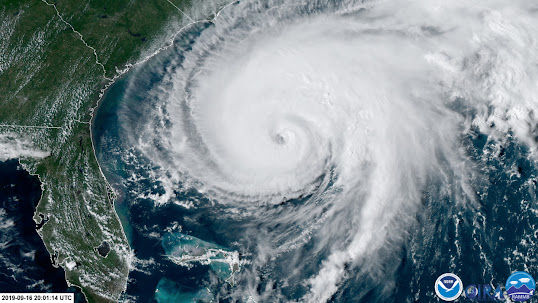
Much of the curriculum in schools is silent on climate change, as the New York Times reports. The article about addressing the issue in education, especially middle school,  states that there are more articles online that misinform about the topic than cover it accurately.  Teaching students to search for reliable information on the topic should look for search terms in Google that will lead them to accurate scientific information. While the article states the importance of teaching this topic to the next generation, it sidesteps how teachers can find accurate information about climate change. Students, parents and teachers can investigate the reputable information about the topic with one simple set of search parameters on Google. The keywords are as follows: NOAA climate change site:.gov It's a travesty that The Times' goals don't include informing people about NOAA, the National Oceanic Atmospheric Administration in its article about climate change. The article mentions...

Popular posts from this blog

STEM Wildfire Education Necessity

Social Emotional Skills and Holistic Education

Writing a Personal Essay